
Information protection will be a major priority in 2025, and by 2032, the worldwide data privacy software market is expected to grow to $45.13 billion.
This demonstrates that data privacy is no longer just about adhering to rules; it has become a crucial factor in business success.
With the rapid growth of the online world, massive amounts of personal data are being collected and stored. This has raised concerns, making people demand more transparency and control, pushing businesses to prioritize privacy.
New privacy laws, stricter enforcement, and rising cybersecurity risks are reshaping the landscape. Customer trust is now a key advantage, while poor data protection can lead to heavy fines and loss of reputation.
Data privacy compliance software enables organizations to safeguard sensitive data, manage collection, enforce policies, and stay compliant with standards like GDPR, CCPA, and HIPAA.”
So in this article, you will explore the top data privacy compliance software of 2025, showing how these tools can help businesses meet complex regulations, stay secure, and build stronger trust with their customers.
Why Data Privacy Compliance Software Matters in 2025
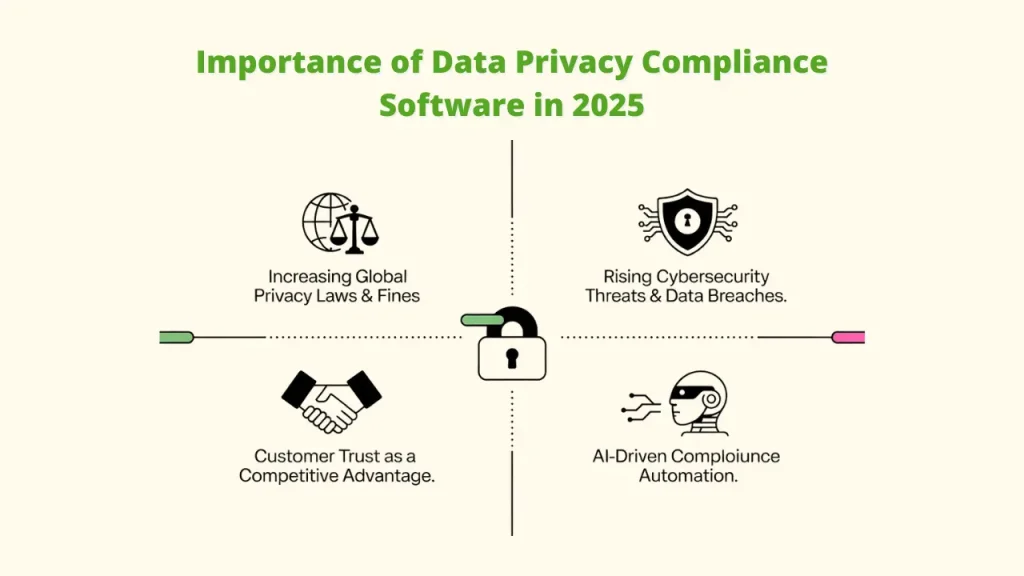
The demand for smart, automated Data Privacy Compliance Software has never been more important. Here’s why:
A. Increasing Global Privacy Laws and Fines
The rules around data privacy are getting stricter and more complicated worldwide. For businesses, keeping up with different and sometimes conflicting laws is nearly impossible without the right tools.
Compliance software makes this easier by helping organizations stay updated, reduce the risk of fines, and manage global requirements with features like customizable, multi-language consent banners and automated compliance checks.
B. Rising Cybersecurity Threats & Data Breaches
Hackers are becoming more advanced, and personal data is one of their biggest targets. Data privacy compliance software acts as an extra shield by identifying sensitive data, controlling who can access it, and responding quickly if a breach occurs when minimizing damage and risk.
C. Customer Trust as a Competitive Advantage
Today’s consumers are extremely concerned about the handling of their data and favor companies that demonstrate their ability to protect it. By showing a strong commitment to privacy, businesses not only avoid risks but also gain customer loyalty and improve their reputation.
D. AI-Driven Compliance Automation
Manual processes are no match for the speed of modern data flows. AI and machine learning are now being integrated into data privacy compliance software to automate tasks like data mapping, risk assessments, and subject rights requests, freeing up compliance teams to focus on strategic initiatives.
Essential Elements of Data Privacy Compliance Software
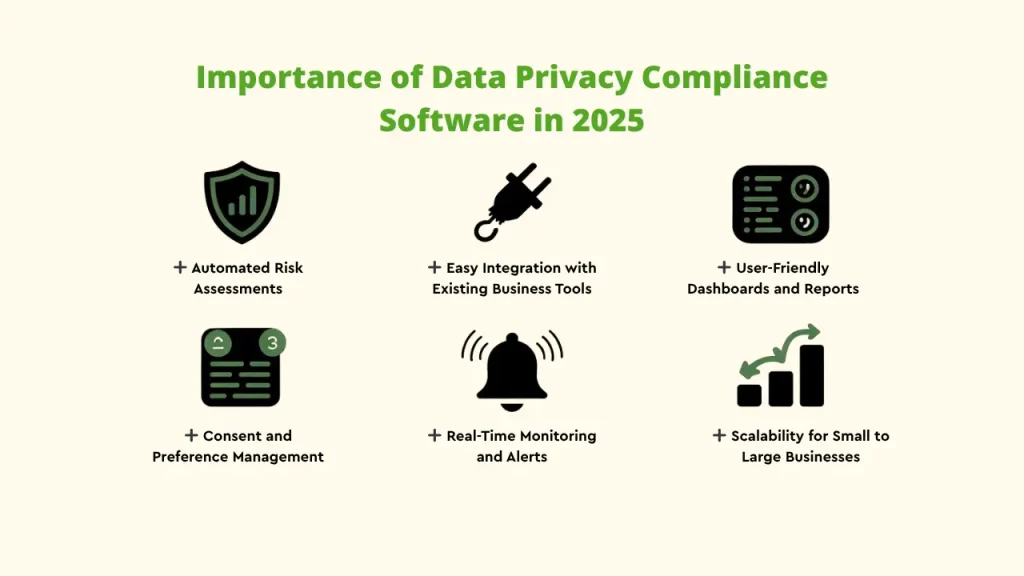
When choosing data privacy compliance software for 2025, focus on these important features:
➕ Automated Risk Assessments and Reporting
Select software that can automatically scan your data, identify potential risks, and generate detailed compliance reports without requiring additional manual work. Tools like Complyfi are great examples, offering AI-powered dashboards with real-time updates.
➕ Easy Integration with Existing Business Tools
The best data privacy compliance software integrates seamlessly with your current technology stack, including CRM systems, marketing platforms, cloud services, and data warehouses.
➕ Consent and Preference Management
Consent history monitoring, automated consent renewal procedures, and granular preference centers are examples of advanced consent management that go beyond simple cookie banners.
➕ Real-Time Monitoring and Alerts
Proactive monitoring systems that provide instant notifications about potential compliance issues, data breaches, or regulatory changes affecting your business.
➕ Scalability for Small to Large Businesses
Solutions that can evolve alongside your company, with flexible pricing methods and feature sets that adapt to changing business needs and regulatory constraints.
Top Data Privacy Compliance Software in 2025
1. ComplyFi
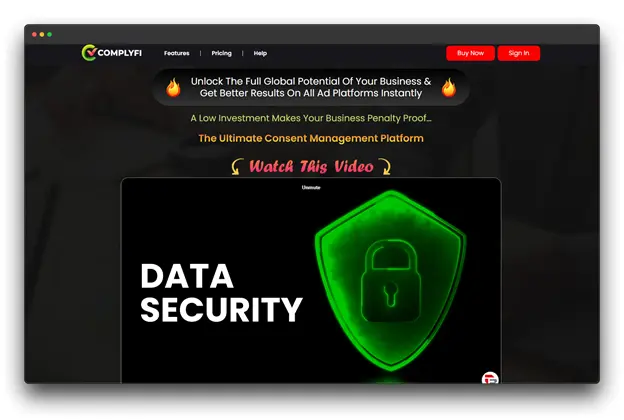
Overview: With ComplyFi, organizations can swiftly and efficiently comply with international data privacy regulations. With the use of AI, it automatically divides cookies into categories like marketing, analytics, and important. For website owners, this saves time and facilitates regional compliance.
Initial Cost: Starts at $67/month for agencies and mid-sized businesses.
Pros
📌 Simple interface that’s easy to use with little training
📌 Strong consent and preference management features
📌 Smart AI-based risk assessments
📌 Works smoothly with common business tools
Cons
📌 Enterprise features are priced more.
📌 Fewer choices for industry-specific customization
Main Focus: Automation of end-to-end privacy compliance with a focus on intuitive implementation
2. Osano
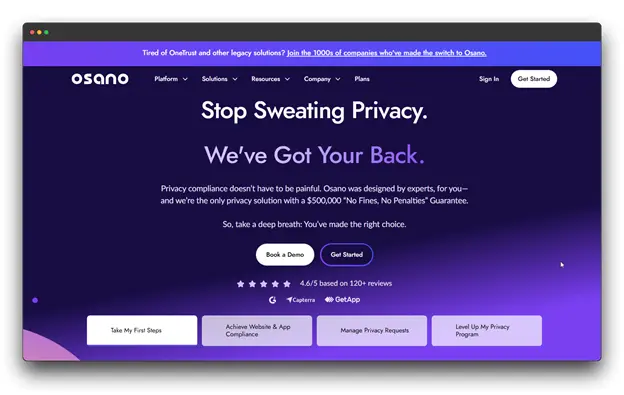
Overview: In contrast to complicated enterprise technologies, Osano is intended to be simple to use. It focuses on making data privacy compliance software simple and available for businesses of all sizes. With this tool, companies can discover, track, and analyze data to gain useful insights.
Initial Cost: The monthly starting price for these premium plans is $125.39.
Pros
📌 Frequent updates to keep up with changing regulations
📌 Good customer service and vibrant community resources
📌 Quick and simple setup process
Cons
📌 Advanced features tend to require more effort to learn.
📌 May require additional tools for complex enterprise needs
Main Focus: Making privacy compliance accessible for small and mid-sized businesses, with strong features for consent management and vendor risk handling.
3. Captain Compliance
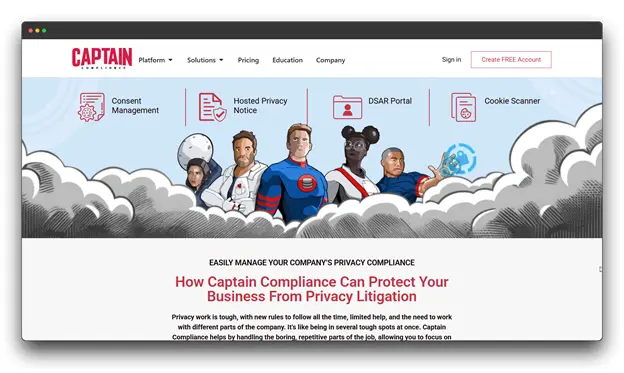
Overview: The primary purpose of Captain Compliance is to manage website compliance and cookie consent. It provides focused digital marketing solutions and makes it easier to comply with regulations, provide your customers in clear options, and foster the crucial trust that your business needs.
Initial Cost: The professional plan starts at $449/month; other plans are custom-priced.
Pros
📌 Strong expertise in cookie compliance
📌 Focus on improving website compliance and performance
📌 Fast setup for websites
Cons
📌 Limited to website compliance only
📌 May require extra tools for full privacy programs
Main Focus: Cookie consent, website compliance, and scalable privacy solutions for e-commerce and growing brands.
4. Privacera
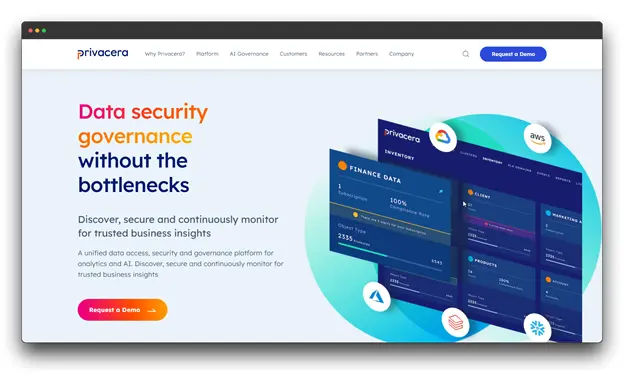
Overview: The primary focus of Privacera is on data governance and discovery for major businesses, especially those with intricate cloud architecture and big data environments. This software helps you locate, protect, and continuously track trustworthy business insights.
Initial Cost: Custom enterprise pricing available on request.
Pros
📌 Excellent support for cloud-native environments
📌 Powerful data discovery tools
📌 Full set of governance features
📌 Scales easily for large volumes of data
Cons
📌 Setup can be complex
📌 Higher pricing, less suitable for small businesses
📌 Needs technical expertise to use effectively
Main Focus: Enterprise-level data discovery, governance, and access management for large-scale data systems.
5. CookieYes
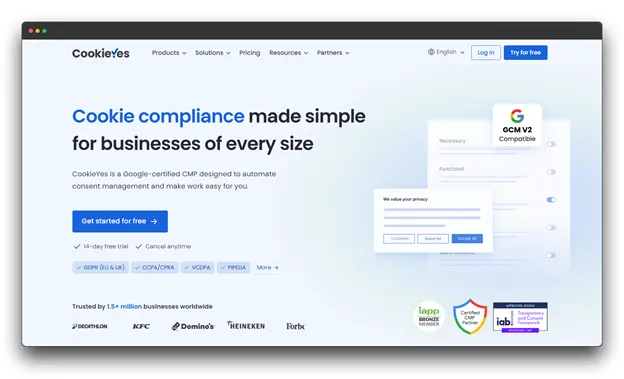
Overview: For websites and mobile apps, CookieYes provides straightforward cookie consent management with an emphasis on CCPA and GDPR compliance. It includes monthly scans and a centralized consent log to automate cookie management.
Initial Cost: The Ultimate plan starts at $55/month with scheduled scanning included.
Pros
📌 Reasonably priced
📌 Simple and quick setup
📌 Discusses important privacy laws
📌 Supports both mobile apps and webpages.
Cons
📌 Mainly limited to consent management
📌 Basic reporting and analytics features
📌 May require other tools for full compliance
Main Focus: Low-cost cookie consent management designed for small to medium-sized websites.
6. Collibra
Overview: Collibra is a well-known data governance platform that offers tools for data cataloging, tracking data lineage, and managing policies. It supports teams in maintaining data quality, ensuring compliance, and keeping detailed audit records.
Initial Cost: Pricing begins at $20,000 per year.
Pros
📌 Full set of data governance features
📌 Strong security for enterprise needs
📌 Highly customizable options
📌 Wide support for APIs and integrations
Cons
📌 Costly and difficult to handle
📌 Long setup process
📌 Needs dedicated staff to run effectively
📌 Not suitable for smaller businesses
Main Focus: Privacy and enterprise data governance for extensive operations
7. DataGuard
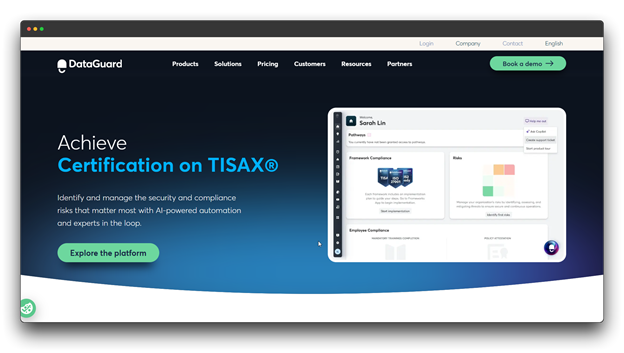
Overview: DataGuard gives firms cutting-edge technology and professional guidance by providing a combination of managed services and privacy compliance software. The platform offers total privacy protection with AI-powered automation and expert support.
Initial Cost: Basic plan starts at $175/month. Other plans are custom-priced depending on company size and compliance needs.
Pros
📌 Mixes professional consulting with software
📌 Strong knowledge of European privacy laws
📌 Covers risk management in detail
📌 Includes regular compliance audits
Cons
📌 Higher cost because of service-based features
📌 Heavier focus on Europe, less global reach
Main Focus: Providing end-to-end privacy compliance through AI automation and expert-managed services.
8. TrustArc
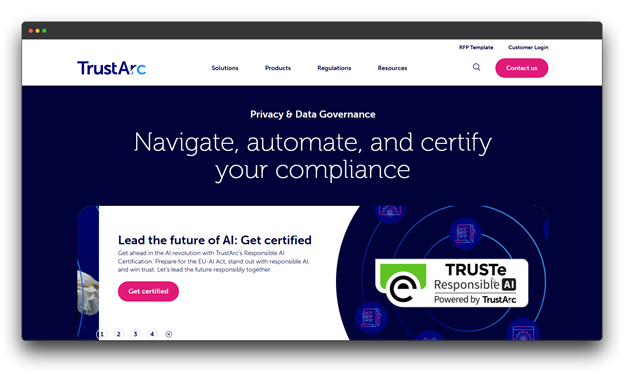
Overview: TrustArc is one of the most established platforms for privacy management, with years of experience in helping businesses meet compliance requirements. It offers a wide range of preference management and automation for handling data subject rights.
Initial Cost: Enterprise pricing usually starts at $137,000 per year, but final costs depend on business needs.
Pros
📌 Deep regulatory knowledge and experience
📌 Complete privacy program management tools
📌 Strong integration options
📌 Well-recognized and trusted in the market
Cons
📌 Complex interface that may take time to learn
📌 Mixed customer support reviews
📌 Long setup and implementation process
Main Focus: Enterprise-level privacy program management with strong regulatory expertise.
9. Ketch
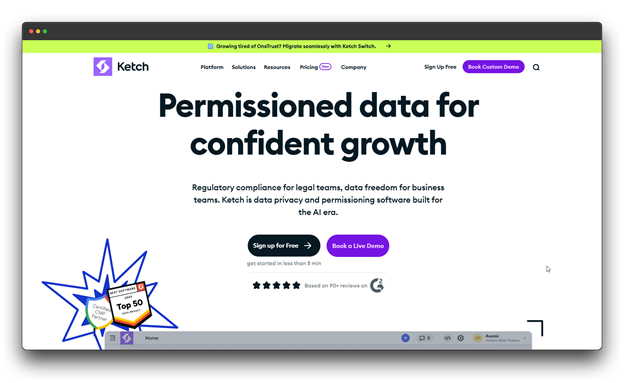
Overview: The data privacy compliance software so Ketch, automates consent management and data subject rights (DSRs). It highlights a user-friendly interface for developers and a no-code method for creating policies.
Initial Cost: Pricing starts at $150/month, including consent management platform (CMP) and integrations.
Pros
📌 Modern API-first design
📌 Easy for developers to implement
📌 Flexible and customizable privacy controls
📌 Detailed technical documentation
Cons
📌 Setup requires technical expertise.
📌 Still a more recent platform, its features are expanding with time.
📌 Enterprises may lack some advanced governance tools.
Main Focus: API-first privacy infrastructure designed for technical teams and developer-friendly compliance.
Comparison Table: Top Data Privacy Compliance Software in 2025
| Software | Cost | Best For | Key Strength |
| ComplyFi | $299/month | Mid-market businesses | AI-powered automation+ affordability |
| Osano | $125.39/month | SMBs | User-friendly interface |
| Captain Compliance | $449/month | Website owners | Cookie compliance |
| Privacera | Enterprise pricing | Large enterprises | Data discovery |
| CookieYes | $55/month | Small websites | Affordable consent management |
| Collibra | $20,000/year | Fortune 500 | Comprehensive governance |
| DataGuard | $175/month | European businesses | Managed services |
| TrustArc | $137,000/year | Large enterprises | Regulatory expertise |
| Ketch | $150/month | Tech-forward companies | API-first approach |
Emerging Trends in Data Privacy Compliance Software
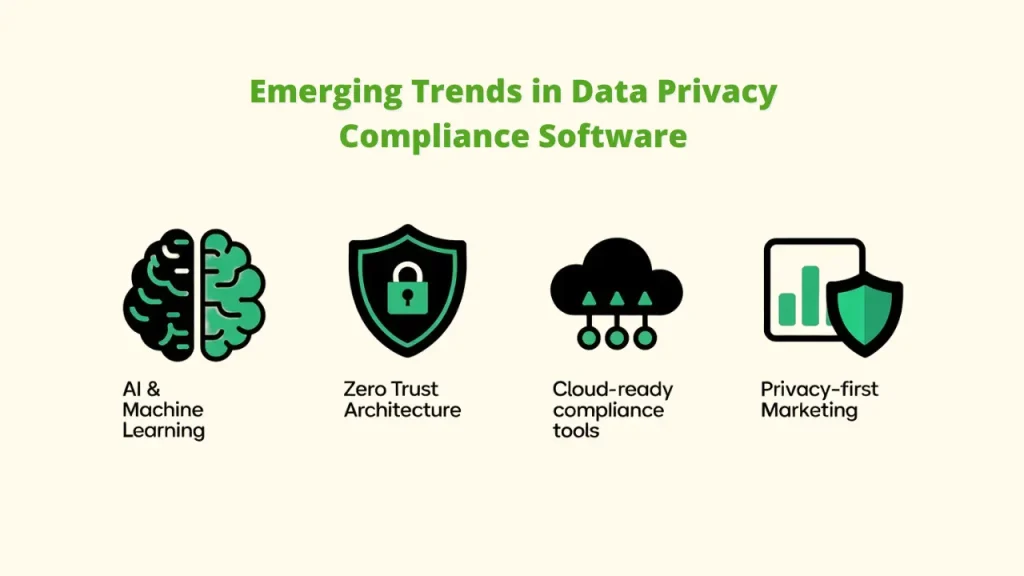
A. AI & Machine Learning for Smarter Compliance
Artificial intelligence is revolutionizing data privacy compliance software by enabling predictive risk assessment, automated data classification, and intelligent policy enforcement. It can now:
✅ Predict risks before they occur
✅ Sort and label data automatically
✅ Apply policies without manual effort
This saves time and ensures companies keep up with new privacy laws.
B. Zero Trust Architecture (ZTA ) Security
Zero Trust doesn’t assume anyone or any system is safe by default. Every access request is verified, which means:
🔒 Reduced insider threats
🔒 Stronger defense against cyberattacks
It’s becoming an essential part of modern privacy compliance.
C. Cloud-Ready Compliance Tools
As more companies move their systems to the cloud, data privacy compliance software is being designed for cloud environments. These tools provide:
🌐 Easy integration with platforms like AWS, Azure, and Google Cloud
📈 Better scalability for growing businesses
⚡ Flexible deployment options
For example, tools like ComplyFi offer automated cookie scanning and help ensure GDPR and other privacy law compliance.
D. Privacy-First Marketing
Marketers still need data, but customers expect privacy. Modern compliance tools support this balance by offering:
📊 Analytics that protect user privacy
🍪 Alternatives to cookie tracking
🤝 Smarter use of first-party data
This way, businesses can stay compliant while still connecting effectively with customers.
Conclusion
By 2025, data privacy compliance software has gone from being optional to something every business truly needs. With the market expanding quickly and privacy rules getting stricter, companies can’t afford to ignore compliance anymore.
The tools discussed in this guide show the latest in privacy technology, each built to serve different business needs. Whether you’re a small startup needing a budget-friendly option or a large company looking for full-scale governance, there’s a tool that fits your goals.
If you’re looking for both advanced features and an easy-to-use setup, ComplyFi is a strong pick. It offers AI-driven automation, smooth integrations, clear consent management, and flexible pricing that adapts as your business grows.
Investing in the right data privacy compliance software not only keeps you safe from fines but also builds customer trust and sets your business up for long-term success in a world where data protection matters more than ever.
Stay compliant, protect customer trust, and secure your future with the right compliance tools.
FAQs about Data Privacy Compliance Software
What distinguishes data security from data privacy?
How does AI relate to compliance with data privacy?
Data privacy compliance software like ComplyFi, for example, keep records of user consent, tracks IP addresses, and detects cookies.